



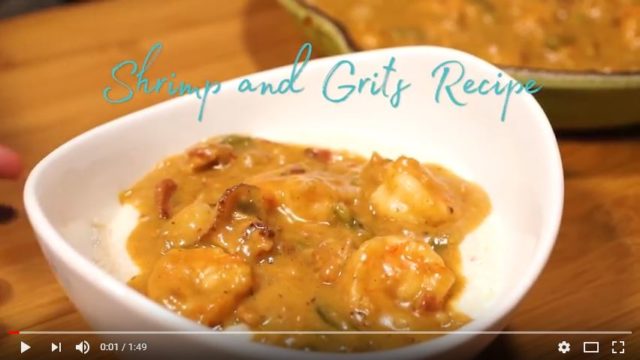
If you’ve spent any time in southern coastal restaurants, you’re probably aware that we take shrimp and grits pretty seriously. From dives to fine dining, this cherished southern tradition is likely to be on the menu. Naturally, this long and rich history has created room for untold variations. Whether its coming from a chef or your grandmother’s worn out recipe book, you will find a world of unique ways to prepare… all of which will be awesome in their own way.
In light of all the variation out there, we thought we would buck the trend and give you our essential shrimp gravy recipe down to the very basic of ingredients that were around when the dish was first born. Rest-assured, however, that there is nothing basic about the taste profile this dish presents. It’s downright delicious with the added bonus that you will be able to recreate it time after time.
This recipe and blog post is in honor of Grace Larson, this recipe’s most revered keeper and a wonderful lady who is very much missed.
Ingredients (Serves 4):
1 lb shrimp (Save two cups of shell for stock recipe)
1/2 lb bacon (uncured)
5 cups water
1/2 cup half and half
Salt and pepper to taste
1 large green bell pepper, chopped
1 large yellow onion, chopped
3 large cloves garlic finely chopped
1 bay leaf
1 tablespoon seafood or cajun seasoning
1 teaspoon paprika
1 pinch brown sugar (optional)
1/4 cup butter or 2 tablespoons oil (if needed to add to bacon grease, see below)
1/4 cup all purpose flour
Steps:
1) Clean the shrimp: Cleaning shrimp is a labor of love that can be a discouraging factor for those with limited time to cook dinner. Luckily, we have a solution to this age-old dilemma by allowing you to clean shrimp with rapid-fire speed. The Toadfish Frogmore Shrimp Tooltakes a tedious 3 step process (shell, devein, and butterfly) and combines them into one single smooth motion. Simply insert the tool where the vein is located and follow the top of the shell from head to tail until it is fully removed. This single motion will also dredge, devein, and butterfly at the same time, giving you a ready to cook shrimp in seconds. Make sure to save your shrimp shells for the next step.
2) Make the shrimp stock: This is where our recipe diverges from the pack as a southern standout. It’s also what makes our recipe so deliciously complex despite the short list of ingredients. To make the stock, bring salted water to boil in a medium sauce pot. Add the 2 cups shrimp shells, bay leaf, and seafood seasoning and lower to a simmer. This pot can continue to simmer until it is needed towards the end of the recipe.
4) Cook the bacon/Prep the Vegetables: In a large frying pan, cook the half pound of bacon over medium/low heat with care not to overcook or burn. Once cooked through, remove the bacon to a plate and lower heat while you are prepping the vegetables. Do not clean the grease out of the pan.
While the bacon cooks, prep the vegetables: Finely chop the garlic. Chop the onion and bell pepper into 1/4 inch squares.
5) Cook the vegetables: Add additional oil or butter if bacon pan is not very well greased and return to medium heat (hot but not smoking). Add the onion and garlic to the reheated bacon grease and cook until fragrant (1-2 minutes). Add the bell pepper and cook until the vegetables start to soften (2-4 minutes). Lightly season with salt and pepper to taste. While the vegetables cook, chop the bacon and set aside if using.
To add the bacon back or not to add the bacon: if you prefer a loud bacon flavor, you can add the chopped bacon back into the dish. The more bacon you add, the more it stands out in the flavor profile. For those who prefer a lighter, more seafood forward taste, the bacon need not be added back into the dish. Totally up to your preference, both ways are great.
6) Cook the shrimp: Add the prepped shrimp to the pan with the vegetables and cook until firm (2-3 minutes for regular shrimp, 3-4 minutes for jumbo). While the shrimp cooks, strain the stock into a measuring cup. Season with the pinch of brown sugar (if you choose to use) and paprika.
7) Make your roux (add flour): Slowly add flour to the pan with the shrimp and vegetables while constantly mixing under reduced heat. Stop adding flour once the grease has been completely soaked up and a golden paste has been formed. Be sure to keep stirring and lower heat if needed to avoid burning the roux.
8) Add the Shrimp Stock: Slowly pour the strained shrimp stock into the pan while constantly stirring. Continue adding your stock until you have your desired thickness or consistency of the gravy.
9) Complete the dish: Remove from Heat. Add the half and half and a couple dashes of your favorite hot sauce. Pour over grits and serve!


Share:
Products We Love: November Edition
Toadfish in Outside Magazine
2 comments
Hello toadfish.com Webmaster, very same listed here: Link Text
Hi toadfish.com Administrator, identical listed here: Link Text