



What is a Lowcountry Boil?
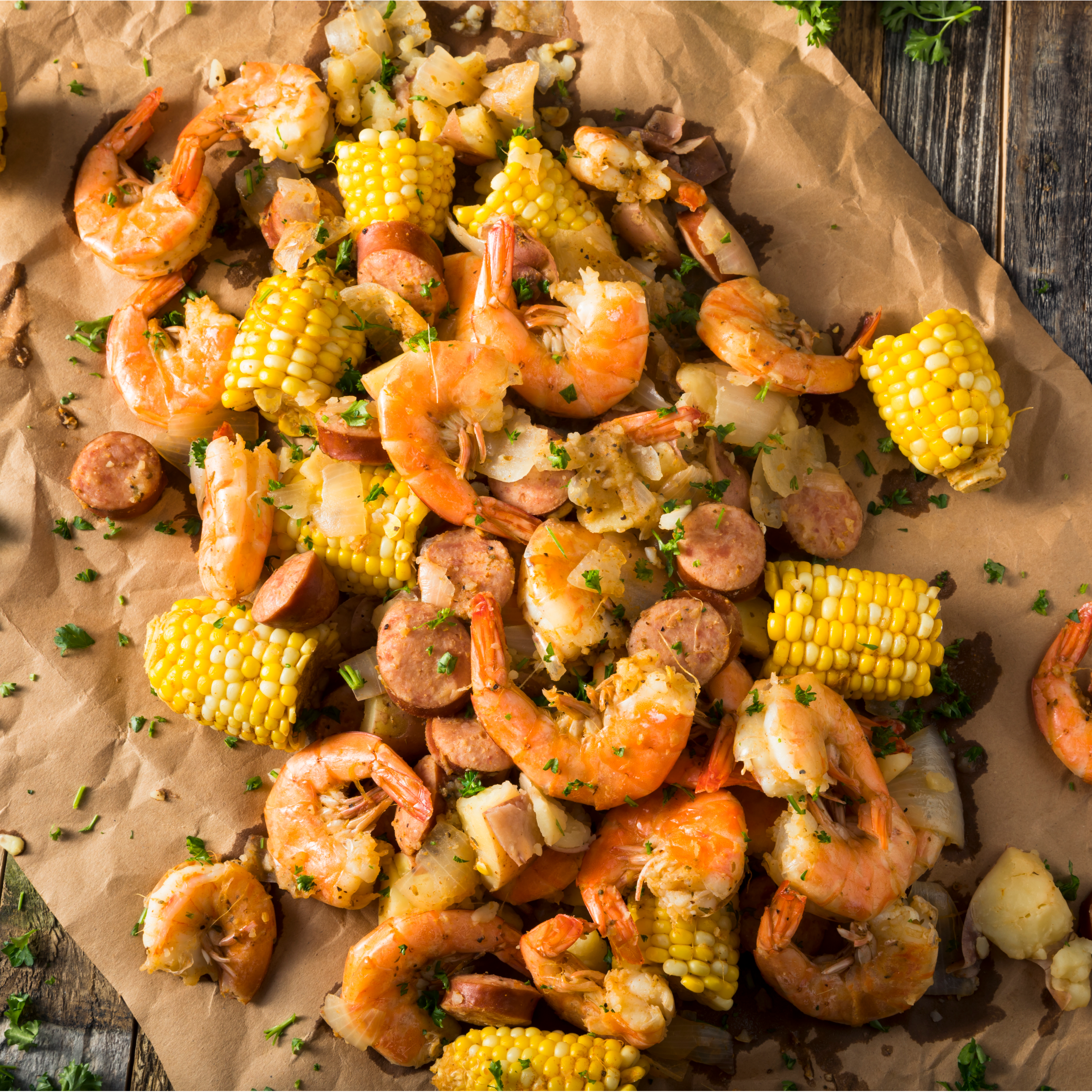
A Lowcountry Boil is a dish that is exclusive to the South. It's a very distinctive Carolina recipe. It resembles a Louisiana crawfish boil in many ways, although the Carolina version uses shrimp rather than crawfish. A classic Lowcountry boil also contains red potatoes, sausage, and corn in addition to the peel-and-eat shrimp.

Why is it called a Lowcountry Boil?
The Lowcountry region along the coast of South Carolina is where the Lowcountry Boil gets its name. Although there are various disagreements about the exact boundaries of the "Lowcountry," it is widely agreed that the southern portions of the South Carolina coast belong there. Although the most popular name for this recipe is Lowcountry Boil, it is also known as Frogmore Stew, Beaufort Boil, Tidewater Boil, or a Carolina One-Pot. (A Frogmore Stew does not contain any frogs. Instead, the nickname derives from a settlement called Frogmore, which existed on St. Helena Island close to Beaufort, South Carolina.)
How To Make a Lowcountry Boil
A Lowcountry Boil is actually extremely simple to prepare, aside from the special cooking equipment (such as a big pot and an outdoor gas burner). The order in which you add the ingredients is crucial. The first ingredient added to the pot is potatoes because they take the longest to cook. Then, in varying time intervals, the sausage, corn, and shrimp are added. (Shrimp are added last because they cook quickly, in just 1-2 minutes.)

What spices go into a Lowcountry Boil?
When compared to crawfish boils, the seasonings used in Lowcountry boils are often a little milder. The most popular seasoning is Old Bay, while Zatarain's crab boil is frequently used if you want to give your boil a little Cajun flavor. You frequently add a few lemons, a few garlic bulbs, bay leaves, peppercorns, and salt to the pot in addition to the dry ingredients. This recipe's seasoning blend is tasty but not overly hot. Naturally, you can change the seasonings to suit your tastes.
INGREDIENTS
• 3 garlic bulbs halved
• 3 Tbsp kosher salt
• 2 Tbsp black peppercorns
• 1 C cajun seasoning
• 4 Lbs of small red potatoes (1½” in diameter)
• 3 Lbs smoked sausage cut into ¾” pieces
• 2 Vidalia onions peeled and quartered
• 10 ears of corn shucked and cut in half
• 5 Lbs large shrimp (21 counts) unpeeled
• Cocktail sauce for dipping
DIRECTIONS
• Using a large stock pot, brown sausage, and onions. Season with 1/4 cup cajun seasoning.
• Add water and bring to a boil, leaving enough space in the pot to add the rest of the ingredients and have them fully submerged.
• Add potatoes, salt, pepper, and remaining cajun seasoning. Boil for 10 minutes, then using a fork, push into a potato to check that it is halfway cooked through.
• Add corn. Boil for 6 minutes. Check a potato again to make sure it is fully cooked through and the fork slides easily through the whole red potato. If not, continue to boil.
• Add shrimp and stir well. As the water returns to a boil for 1-2 minutes the shrimp are done.
• Carefully drain water using a large colander or use a hand-held strainer to transfer food onto a paper-lined table.
• Serve immediately as the shrimp will continue to cook.
• Don’t forget the cocktail sauce for dipping.


Share:
The 5 Best Soft Plastics for Inshore Saltwater Fishing
Tips To Keeping Your Pup Hydrated
3 comments
Great recipe and comments
This was delicious!
Need to make this recipe printable